Start with the company you already have
I see AI Transformation as a management conversation and a building project. Leadership needs to choose where agents could create useful capacity, what must remain under human control and how the organisation should adapt. Those choices then need working systems behind them. I bring both sides together: an external strategic perspective and hands-on implementation.
A useful starting question is: which outcome takes more effort or waiting than it should? Choose a business function that matters, such as handling a service request, preparing a quotation or delivering a software change. Follow the work across departments. The company already knows a great deal about its customers and constraints. That knowledge should shape the system.
Decide what people should own
An agent team changes the work around an employee. Someone still needs to set priorities, judge exceptions and take responsibility for the outcome. Before adding another role to the organisation chart, I want to understand which decisions need professional expertise, which tasks an agent can prepare and where the handover belongs.
That also changes the hiring conversation. A useful profile may combine deep expertise with curiosity about adjacent departments, sound judgment and the ability to direct agents. I help management and HR think through those profiles and develop the people already in the business. Broader responsibility needs coaching, time to learn and clear authority. It should not mean quietly giving everyone three jobs.
Build governance into the workflow
Governance becomes practical when the system knows who may do what. Which information can an agent use? Can it prepare an offer, or also send it? Who approves a price, a payment or a public statement? What happens when the source is incomplete or two instructions conflict?
Take a quotation as an example. Agents could collect requirements, assemble approved product information and prepare a draft. A named commercial owner retains the decisions about price and commitments. The workflow records the review and distinguishes a prepared document from an approved or sent offer. That distinction should remain visible when the system fails or a connection drops.
Shared company memory needs the same care. Approved templates, current policies and customer context need owners, versioning and appropriate access. Giving every agent a separate pile of documents creates competing versions of the business. A maintained knowledge layer gives people and agents a common starting point.
Turn the decisions into a working system
This is where I get hands-on: architecture, agent roles, workflows, testing and implementation with the team. Reusable role blueprints can shorten the starting phase, but the company’s knowledge, tools and decision rights shape the actual responsibilities. A coordination agent, a software agent and a finance agent each need a clear job and a route to ask for help.
Infrastructure choices follow the work. Commercial models and local open-source models can serve different needs. Hardware, privacy, quality, response time and cost all influence that choice. The useful question is which combination supports this task reliably, with controls the business can operate.
Make the organisation visible
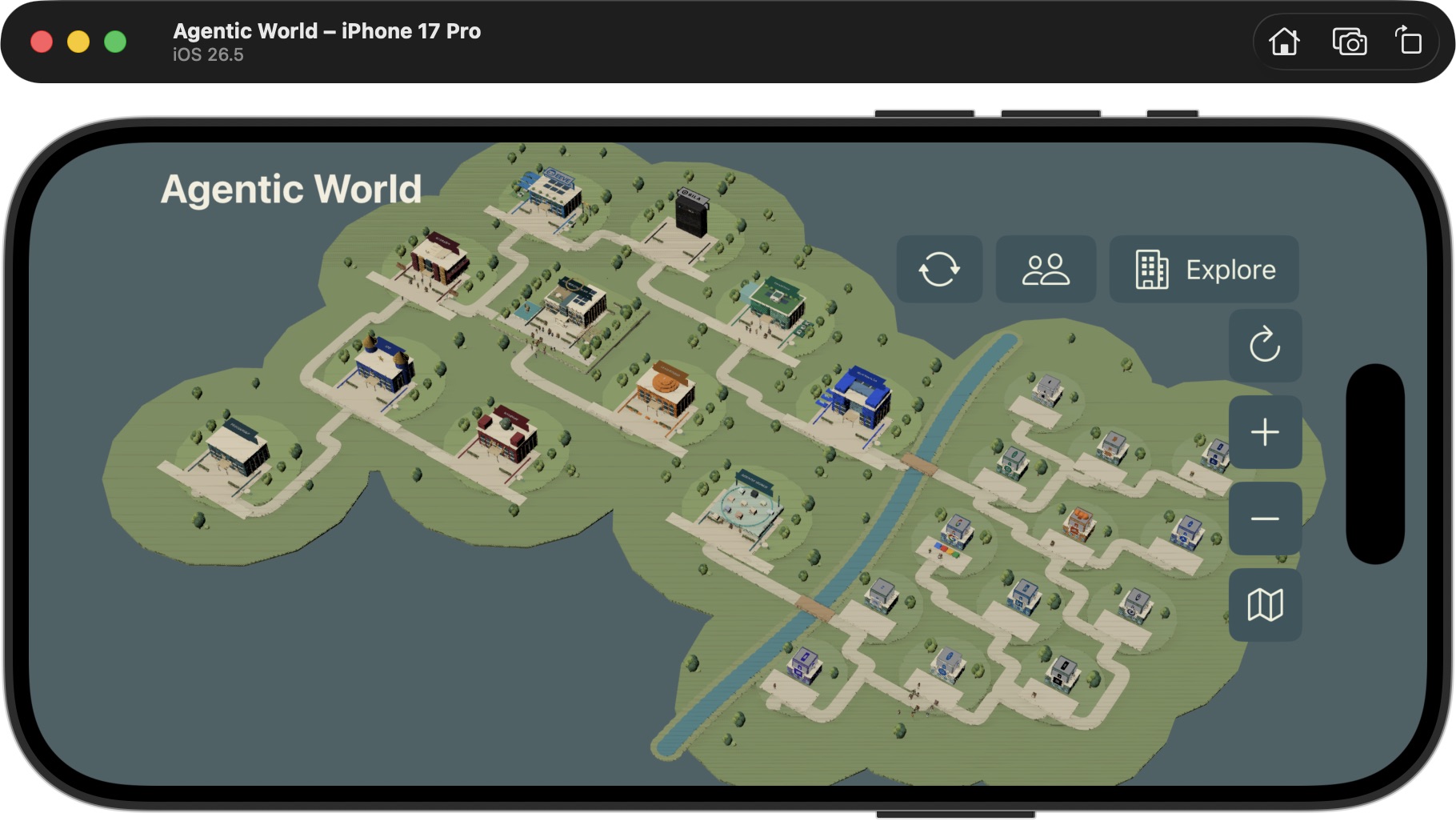
Agentic World is the visual 3D workspace I am developing around my own projects. It helps represent the organisation: its agents, their work and the decisions that need a person. The screenshot shows that development environment. The visual world is a way to understand and manage the work; completed outputs and their checks remain the evidence of execution.
An Agentic Twin also lets us explore an alternative organisation using synthetic data or approved copies in an isolated environment. We can examine roles and handovers before agreeing any production integration. That gives management and employees something concrete to discuss.
Start small enough to learn, important enough to matter
My ambition is 10× faster execution and more capacity for growth. For a first implementation, we need a baseline and a specific outcome. Measure completion time, waiting, correction effort and quality. Include the human work needed to supervise the system. Faster drafts alone do not tell us whether the company is working better.
Then improve what fails, coach the people and expand what works. AI Transformation means helping the existing company make those changes, while building the systems to support them. Your people. Your agents. One working organisation. Where should that conversation begin in your company?